Balanced Scorecard in Strategic Plan Development
In a dynamic and highly competitive environment, organizations are under increasing pressure to align operations with strategy, drive performance, and deliver long-term value. Yet, many institutions continue to rely solely on financial indicators to assess success, an approach that often proves insufficient in capturing the broader dimensions of organizational performance. Enter the Balanced Scorecard (BSC) – a transformative framework that empowers leaders to translate strategy into action, align teams around shared objectives, and monitor progress across multiple dimensions of performance.

What is the Balanced Scorecard?
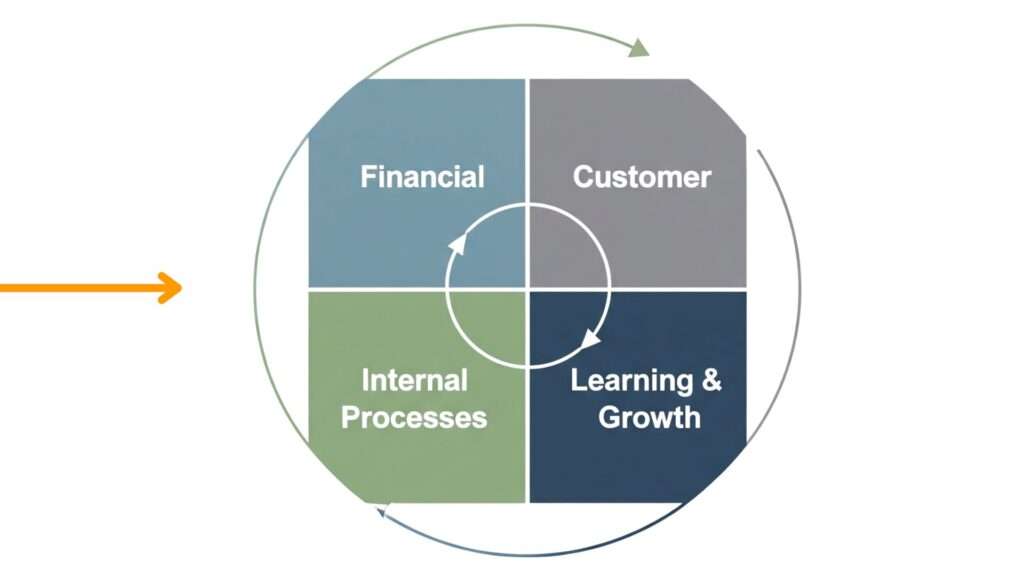
The Balanced Scorecard is a strategic planning and performance management framework that helps organizations translate vision and strategy into action across four key perspectives:
- Financial – How do we look to our shareholders?
- Customer – How do customers see us?
- Internal Processes – What must we excel at internally?
- Learning and Growth – How can we improve and create value?
This multi-dimensional view enables leaders to monitor current performance while building capabilities for future success.
Integrating BSC in Strategic Plan Development: The Nine Steps to Success
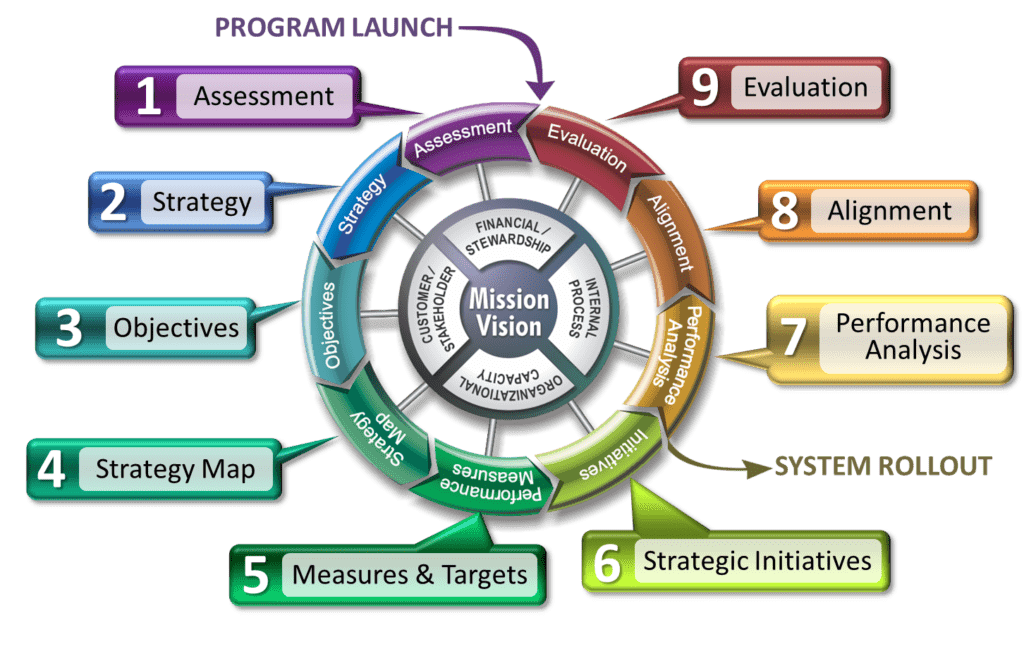
The Nine Steps to Success™ is a disciplined, practical approach to developing a Balanced Scorecard and aligning it with strategic planning. Here’s how organizations can use this model to craft a powerful strategic plan:
Step 1: Assessment
This foundational step involves a situational analysis to understand the organization’s internal and external environment. Tools like SWOT, PESTEL, or stakeholder analysis are used to identify strategic issues, challenges, and opportunities. This creates a strategic context and readiness for change.
Step 2: Strategy
Here, leadership clarifies the organization’s mission, vision, and core values. Strategic themes and broad areas of focus such as innovation, operational excellence, or customer intimacy are established. These themes guide the rest of the strategic planning process.
Step 3: Strategic Objectives
Strategic objectives are the building blocks of the scorecard. These are specific, actionable statements of what the organization must do well to execute its strategy. Objectives are organized under the four BSC perspectives and aligned to the strategic themes.
Step 4: Strategy Map
A strategy map is a visual representation of the cause-and-effect relationships among strategic objectives. It shows how objectives in the learning and growth perspective drive improvements in internal processes, which in turn improve customer outcomes and ultimately financial results. This tool clarifies the strategy for everyone in the organization.
Step 5: Performance Measures
For each objective, performance measures (KPIs) are developed to track progress. These indicators ensure accountability and provide quantifiable feedback on whether strategic goals are being met. Each measure includes a baseline, target, and data source.
Step 6: Strategic Initiatives
Strategic initiatives are projects or actions designed to close performance gaps. By linking initiatives to specific objectives and measures, the organization ensures that resources are allocated to what matters most.
Step 7: Performance Analysis
This step involves setting up performance dashboards or scorecards and regularly reviewing progress. Performance data is analyzed to identify trends, variances, and areas that require corrective action. This analysis feeds into decision-making at all levels.
Step 8: Alignment
The success of any strategy depends on organization-wide alignment. At this stage, the BSC is cascaded to departments, teams, and individuals, ensuring that everyone’s efforts contribute to overarching goals. Alignment includes personal scorecards, communication plans, and incentive systems.
Step 9: Evaluation
Finally, the entire strategic management process is reviewed to assess what’s working and what needs to be improved. This includes evaluating the strategy itself, the quality of the measures, and the effectiveness of communication and alignment efforts. Lessons learned feed into the next planning cycle.
Why Use the Balanced Scorecard in Strategic Planning?
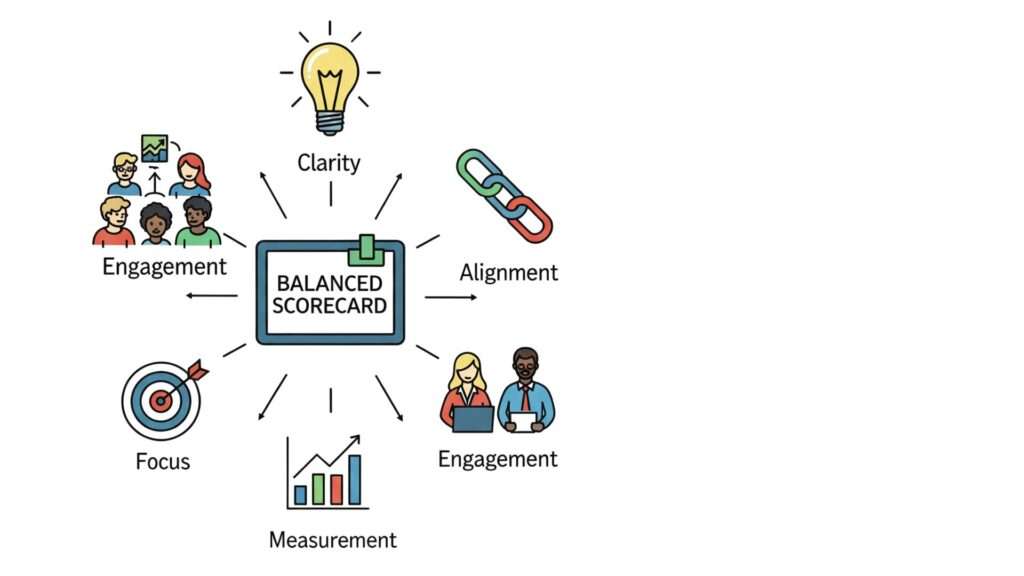
- Clarity and Focus: It ensures that the strategy is clearly defined and focused on what matters most.
- Alignment: It aligns the organization around a shared vision and strategy.
- Measurement: It introduces meaningful metrics for tracking progress and results.
- Adaptability: It supports dynamic strategy reviews and course corrections.
- Engagement: It encourages engagement by linking individual roles to strategic outcomes.
Strategic planning without execution is a missed opportunity. The Balanced Scorecard, when applied using the Nine Steps to Success™, bridges the gap between strategy and results. It transforms strategy from an abstract concept into a daily reality, driving sustainable performance and impact. For organizations ready to move beyond traditional planning and into strategic execution, the Balanced Scorecard offers a proven path.
Ready to Drive Strategic Alignment and Measurable Impact?
Whether you’re a team leader, manager, executive, or development practitioner seeking clarity, cohesion, and accountability in your strategy execution, our Balanced Scorecard Courses is your next step.
Enroll in our training programs on balanced Scorecard and be part of leaders building resilient, data-driven, and strategically aligned organizations across Africa.